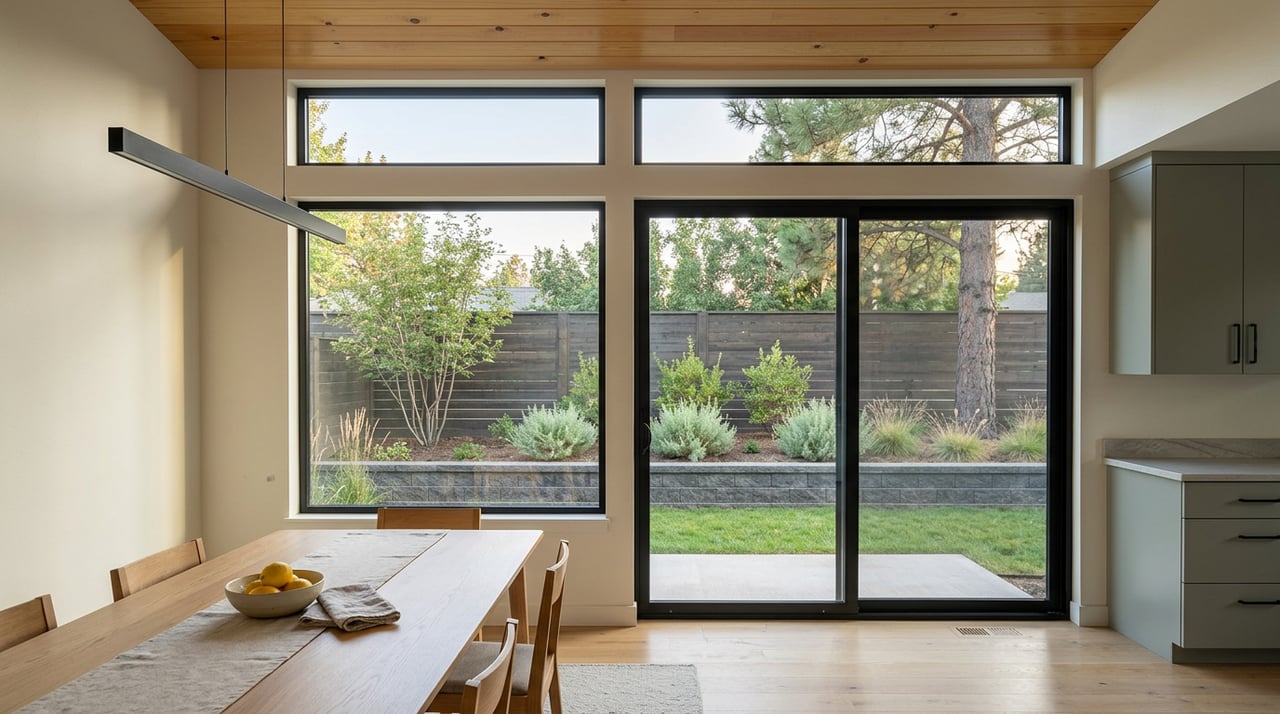
Bend Westside vs Eastside Home Prices in 2026
August 13, 2026
August 13, 2026
Opening weekend at Base Camp, the new food truck lot the McGee family built next to their Powder House ski shop on Century Drive, pulled in more than 500 people in two days. Somewhere in that crowd, phones were almost certainly open to two listings at once: one on the west side near Northwest Crossing, one on the east side past the Third Street corridor, both hovering around the same price. That comparison, more than any single median, is what actually tells you something about buying in Bend right now.
Depending on which index you check, Bend's citywide median in early summer 2026 sat somewhere in the $700,000s, down roughly 6 percent from a year earlier. Redfin's three months ending May 2026 put the median sale price at $704,000. Zillow's typical home value, a smoothed figure rather than a raw median, landed at $726,400 as of the end of June. Both point the same direction: prices easing, inventory loosening, homes moving faster than the 33-day average from a year ago.
That's the number every buyer already has. Here's the one most don't: according to the Source Weekly's mid-year checkup on the local market, published in early July 2026, the speed of a sale in Bend depends less on price tier than you'd expect, and not in the direction you'd guess.
| Price Tier | Average Days on Market, First Half 2026 |
|---|---|
| Under $700,000 | 21 days |
| $700,000 to $1 million | 15 days |
| Luxury | 18 days |
Homes priced between $700,000 and $1 million, the Source Weekly reported, are outselling both the cheaper tier below them and the luxury tier above them. Sellers across the board are still landing close to their ask, averaging nearly 96 percent of original list price. But the middle of the market is where buyers are moving fastest, and that's the opposite of what most people assume about a cooling market, where you'd expect entry-level homes to move quickest because more buyers can afford them.
The mechanism isn't complicated once you look at what actually sits in that $700,000 to $1 million band on each side of town. On the west side, it's the entry point: smaller homes in Old Bend, cottages and townhomes in the newer phases of Discovery West, the more modest end of Northwest Crossing. On the east side, it's the upgrade: newer, larger-footprint construction in Mountain View and the Orchard District, the homes built with more square footage per dollar than anything comparable west of the river.
In other words, that price band is where the two markets overlap. A buyer shopping $700,000 to $1 million isn't really choosing between "the west side" and "the east side" as identities. They're choosing between a smaller, older, closer-in home and a bigger, newer, farther-out one, and that's a decision buyers can make quickly because it doesn't require falling in love with a neighborhood first. Below that band, on the east side especially, buyers are more likely to be first-timers weighing financing and condition more carefully, which adds time. Above it, luxury buyers are shopping fewer, more particular listings, which also adds time. The middle is where the decision is simplest, and simple decisions close faster.
The river and Highway 97 split Bend into two halves that behave like different markets, and that split shows up in price the moment you get specific about neighborhoods. Bend Source's own neighborhood profiles, published in 2025, put the median in Old Bend near $895,000 against River West's roughly $760,000, both west-side neighborhoods but more than $130,000 apart depending on proximity to downtown and the Deschutes. Zoom out to the west-east comparison and the gap widens further: entry-level, move-in ready homes still start near $550,000 on the east side, while comparable finishes in sought-after west-side pockets like Awbrey Butte push past $900,000.
None of that is new information on its own. What's easy to miss is that the gap isn't closing, even as the citywide median softens. A buyer watching the overall Bend number drop 6 percent might reasonably expect the west-side premium to shrink too. Instead, the premium holds because it isn't really about current demand. It's about a fixed supply of land close to the river and downtown that isn't getting any bigger, no matter what the rest of the market does.
That fixed-supply story is also why the west side keeps attracting new amenity investment even in a slower market. Base Camp itself is a case study in how long that investment takes to land. Bend Bulletin reported back in April 2025 that the project's builders expected to open by late summer of that year. It didn't open until this July, nearly a full year later, and when it finally did, Hayden McGee, who runs the space for his parents Todd and Shanda, framed it simply.
"It's a place for locals to gather and new locals to make new friends."
Discovery West, the 245-acre master-planned neighborhood west of Northwest Crossing, tells a similar story on a longer timeline. Developed in phases by Brooks Resources, it now includes Discovery Corner as its retail and gathering hub and the paved Outback Trail connecting to Shevlin Park, both completed years after the neighborhood's first residents moved in. One early resident, Katie Haakenson, told Central Oregon Daily she thinks it's an ideal place to raise a family, describing kids who bike between houses and walk to the neighborhood shops for ice cream once the amenities finally opened.
The east side isn't standing still either. River's Place, the food truck pod tucked behind Jake's Diner off Highway 20, has quietly built its own following with a handful of trucks and a covered tap house. But the scale of investment isn't comparable. Base Camp alone represents a 7,000-square-foot building with a 50-foot bar and a rooftop garden. That asymmetry in amenity spending is a slower-moving version of the same mechanism driving home prices: money concentrates where land is already scarce, which reinforces the premium rather than closing it.
If you're comparing Bend to itself, the honest answer isn't "west side for lifestyle, east side for value." It's that the price band you're shopping in matters more than which side of the highway you start on. Buyers in the $700,000 to $1 million range are competing in the fastest-moving segment of the market right now, on either side of town, which means less time to deliberate and less room for lowball offers than the headline "buyer's market" framing suggests. Buyers below that band, particularly on the east side, are working with more time and more negotiating room than the overall days-on-market average implies. Buyers above it are shopping a smaller, more patient pool where the softened luxury tier gives more room to negotiate than it has in the past few years.
Knowing which of those three markets you're actually in, rather than which side of the map, is the difference between pricing a strategy and just picking a neighborhood you liked on a Saturday drive.
Does the west side always cost more than the east side in Bend? In nearly every comparable price and square footage bracket, yes. The gap is tied to a fixed supply of land near the river and downtown, not to short-term demand, which is why it hasn't narrowed even as citywide prices have eased in 2026.
Why are homes priced between $700,000 and $1 million selling faster than cheaper ones? That band is where west-side entry-level homes and east-side upgrade homes overlap in price, giving buyers a simpler, faster comparison to make. Data from the first half of 2026 puts this tier at 15 days on market, faster than both the under-$700,000 tier at 21 days and the luxury tier at 18 days.
Will Discovery West's continued build-out close the west-east price gap? Unlikely on its own. New construction adds inventory, but Discovery West sits on the same scarce west-side land that commands the premium in the first place, so new homes there tend to arrive priced at the top of the range rather than pulling it down.
Comparing two listings on your phone only gets you so far when the two sides of a city are behaving like two different markets. If you want a read on which price band actually fits your timeline and your budget, Brandon Cook Bostick offers a free home valuation and a straight answer about where your money goes furthest in Bend right now.
We bring unmatched expertise to the Redmond real estate market. Whether you are buying a Central Oregon home or selling a property, the Brandon Cook Bostick Team provides dedicated guidance. Trust us to navigate your real estate journey, ensuring your goals are met with ease.
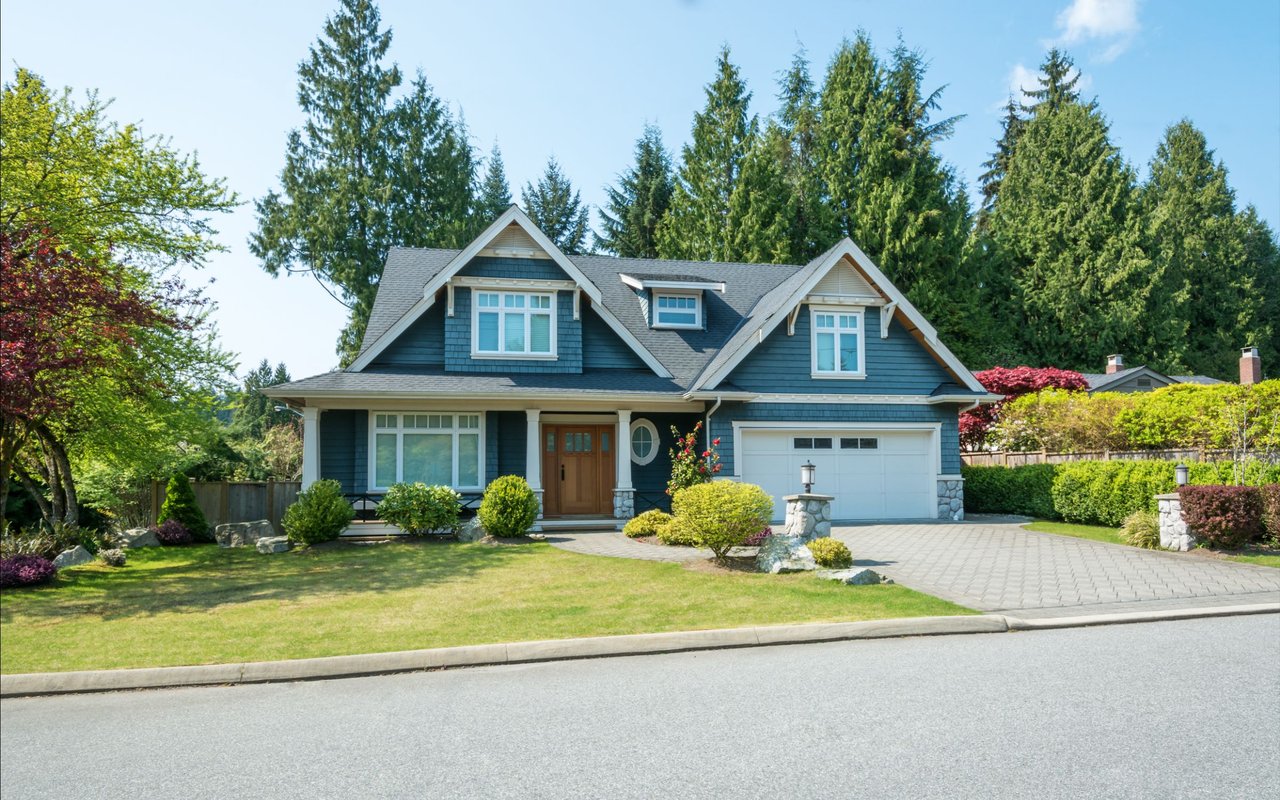
Brandon Cook Bostick
535 SW 6th St Ste 101 Redmond, OR 97756