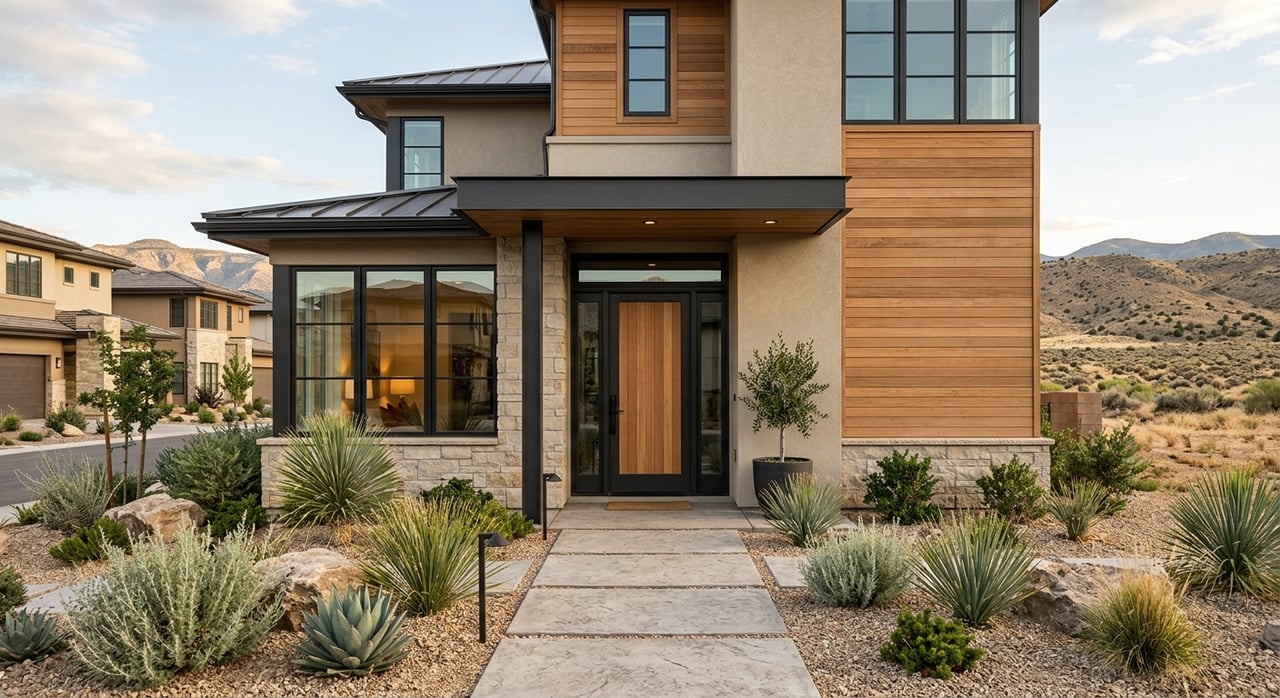
Redmond vs Prineville Homes: How to Choose Your Base
June 25, 2026
June 25, 2026
If you are buying your first home in Central Oregon, one question can shape almost everything that comes next: Redmond or Prineville? Both can be smart places to start, but they offer different day-to-day experiences, price points, and housing options. When you understand how each market fits your budget, commute, and lifestyle goals, the choice gets much clearer. Let’s dive in.
For many first-time buyers, the biggest difference is simple: Redmond tends to cost more, move faster, and offer more housing variety, while Prineville tends to come in a bit lower on price and lean more toward traditional detached homes.
Redmond is also the larger city, with 36,092 residents compared with Prineville’s 11,470. That size difference can affect how each place feels on a daily basis, from pace and services to the types of homes and amenities you are likely to find.
If budget is your top concern, this is usually the first place to look. Recent 3-month Redfin data through May 2026 shows a median sale price of $469,619 in Redmond and $412,253 in Prineville.
That puts Redmond about $57,000 higher in closed sale terms. Realtor.com listing data also shows Redmond trending higher, with a median listing price of $539,000 compared with $514,900 in Prineville.
Census Reporter’s 2024 ACS profiles support the same pattern. Median owner-occupied housing value is $462,500 in Redmond and $425,900 in Prineville.
A lower price does not automatically make one market better. It simply changes your options.
In Prineville, that slightly lower entry point may give you more room in your budget for closing costs, repairs, or a larger detached home. In Redmond, paying more may open the door to stronger market activity, more home-type choices, and added convenience in daily life.
Your first home search is not only about price. It is also about how quickly you may need to act.
Redfin describes Redmond as very competitive, with median days on market at 26. Prineville is labeled somewhat competitive, with median days on market at 49.
That difference can shape your experience in a real way. In Redmond, you may need to be more prepared to move quickly when the right home appears. In Prineville, you may have a bit more time to compare options and think through the decision.
A faster-moving market can feel stressful when you are buying, but it can also matter when you eventually sell. If resale flexibility is high on your list, Redmond’s quicker pace may appeal to you.
That does not guarantee future results, of course. It does suggest that Redmond currently has stronger market momentum than Prineville.
Price is only part of the story. The type of home you want, or are open to, can point you clearly toward one market over the other.
Redmond’s housing stock is still mostly single-unit structures, at 78%, but the city allows a broad range of residential forms. That includes detached homes, duplexes, townhomes, cottage clusters, and apartments.
Prineville’s housing mix is more traditional today. Its city plan shows 68% single-family detached, 14% multifamily with 5 or more units, 7% mobile home, 4% 3- or 4-plex, 2% single-family attached, and 2% duplex.
If you want more than one path into homeownership, Redmond may give you more to work with. A townhome, duplex-style setup, or other attached option could be worth exploring if you want a lower-maintenance property or a different price point.
Redmond’s planning documents also show a clear push toward a broader housing mix. For a first-time buyer, that can mean more ways to match your budget and lifestyle.
If your picture of a first home is a more traditional detached house, Prineville may feel more aligned. Its current housing mix is more centered on that format.
That does not mean you will only find detached homes there. It does mean the market reads as more detached-home-oriented overall.
A home base is not just where you sleep. It is also where you start and end each day.
Census Reporter shows a mean travel time to work of 21.4 minutes in Redmond and 23.8 minutes in Prineville. Redmond also has a higher work-from-home share, 14% compared with 10%, and a lower drive-alone share, 70% compared with 80%.
These numbers suggest a bit more commute flexibility in Redmond. The difference is not massive, but it may matter if convenience is a big part of your decision.
If you travel often, Redmond stands apart. Redmond Municipal Airport is a commercial airport served by five air carriers offering 30 direct flights.
Prineville Airport is about 3 miles southwest of town and is focused on general aviation. That is a very different kind of travel access, so if commercial flights matter to your routine, Redmond has the clearer advantage.
Two markets can be close in price and still feel very different once you live there. That is why lifestyle fit matters just as much as the spreadsheet.
Because Redmond is roughly three times the size of Prineville, it is reasonable to expect it to feel busier and more service-dense, while Prineville may feel quieter and more compact. That conclusion comes from the population difference, not from a direct survey.
Redmond has a strong parks-and-trails network, including places like Dry Canyon Trail and the Redmond Community Skate Park. The city’s Trails Master Plan proposes 23.8 additional trail miles beyond existing trails.
The 5.3-mile Homestead Canal Trail is especially notable because it is designed to connect neighborhoods to job centers, shopping, a regional transit hub, and medical facilities. If you value practical walk or bike connections near town, Redmond stands out.
Prineville highlights places like Pioneer Park, Library Park, Ochoco Creek Park, and the Crooked River Wetlands Complex. The city also features a 10-mile bike path through Ochoco Creek Park.
The wetlands trail system includes 5.4 miles of trails, with 3.25 miles paved. That points to a recreation pattern that feels more creek-and-outdoors centered, while daily mobility appears more car-oriented overall.
If you are torn, try filtering the choice through your top priorities instead of searching for a universal winner. The better market is the one that fits how you want to live now and what you want your first home to do for you over time.
Here is a simple way to think about it:
It is easy to get pulled into a simple price comparison, but your first home is bigger than that. You are choosing the place where your daily routine, finances, and long-term plans come together.
For some buyers, that means stretching a bit more for Redmond because the connectivity, variety, and market pace feel right. For others, it means choosing Prineville because the lower price point and more traditional housing mix create a better starting point.
The good news is that both markets can make sense. If you want clear, local guidance on comparing homes, neighborhoods, and tradeoffs in Central Oregon, connect with Brandon Cook Bostick for practical support that helps you move forward with confidence.
We bring unmatched expertise to the Redmond real estate market. Whether you are buying a Central Oregon home or selling a property, the Brandon Cook Bostick Team provides dedicated guidance. Trust us to navigate your real estate journey, ensuring your goals are met with ease.
Brandon Cook Bostick
535 SW 6th St Ste 101 Redmond, OR 97756