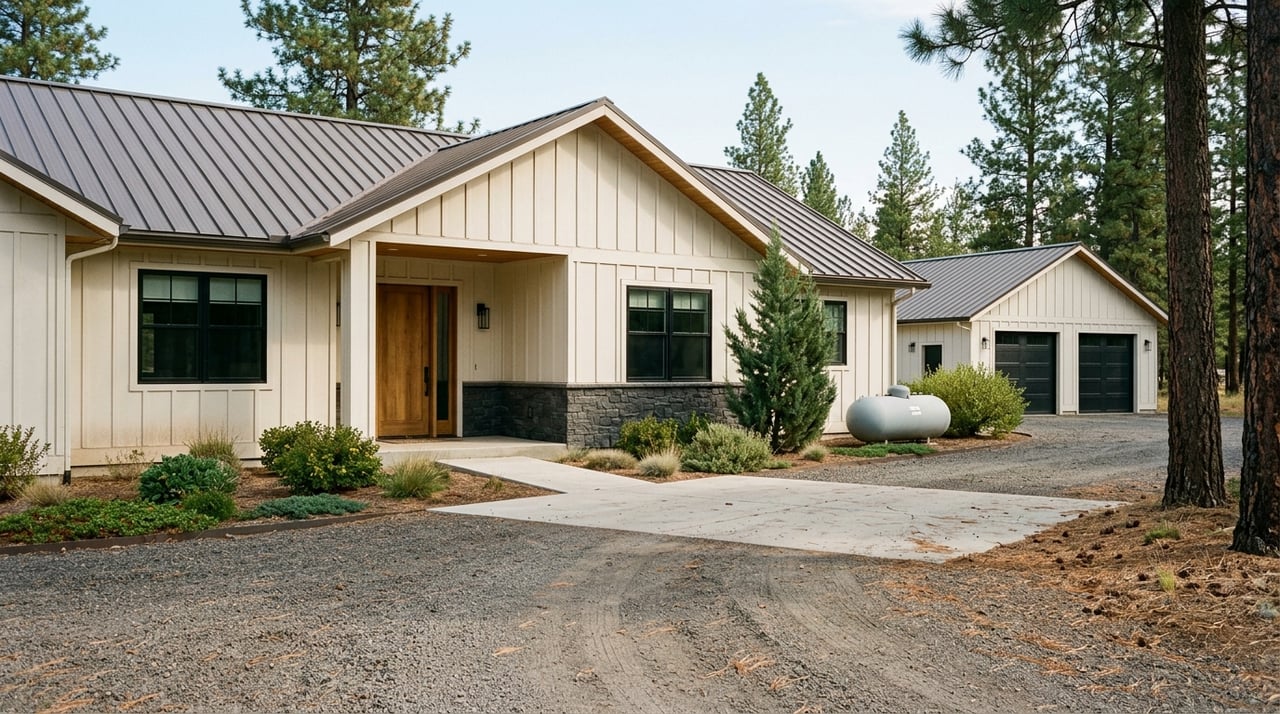
Buying Crook County Acreage Homes: What to Know First
June 11, 2026
June 11, 2026
Buying acreage in Crook County can feel like a dream until you realize the land itself may matter more than the home on it. If you are looking at property near Prineville, Powell Butte, Post, or Paulina, you are not just buying square footage. You are also buying into questions about zoning, access, water, septic, and long-term land management. The good news is that with the right due diligence, you can move forward with much more confidence. Let’s dive in.
Crook County covers 2,991 square miles, and more than half the county is publicly owned. Its private land base is made up largely of rangeland, and Prineville is the county’s only incorporated city. That land pattern shapes how rural property functions and why acreage purchases often depend more on land-use details than on finishes or floor plans.
In practical terms, buying acreage in Crook County usually means you need to look beyond the listing photos. A property can be beautiful and still raise major questions about whether you can build, how you will access it year-round, or what it will take to support a well and septic system. Those details can affect your day-to-day use and your resale options later.
One of the biggest mistakes acreage buyers make is assuming that because a parcel is large, it is automatically buildable for the use they want. In Crook County, zoning matters a great deal. The county uses several Exclusive Farm Use zones, including EFU-1, EFU-2, and EFU-3, along with rural residential zoning such as R-10.
The county’s R-10 materials describe that zone as intended for low-density rural home sites with a minimum parcel size of 10 acres. EFU zoning is different. County materials state that non-farm dwellings in EFU areas are tightly regulated, which means a parcel may not support the kind of home use you expect just because it has acreage.
Before you move forward, confirm the parcel’s current zoning and ask a more specific question than “Can I build?” Instead, ask whether the county will allow the exact use you want, such as:
This is where the zoning map, assessor records, and any prior land-use approvals become especially important. If your plans depend on a future homesite, a second structure, or a different use down the road, you want that research done before you finalize an offer.
Acreage can come with tax treatment that looks attractive at first glance but carries risk if the property use changes. Crook County notes that if property in farmland or forestland special assessment is disqualified, additional taxes of up to 5 years or 10 years may be assessed.
That means your due diligence should include more than the current tax bill. You also want to know whether the land is specially assessed today and what could trigger disqualification after closing. If your intended use does not line up with the property’s current tax status, that can create a surprise expense.
Crook County also notes that Oregon property is valued as of January 1 and the tax year runs from July 1 through June 30. Property tax statements may also include multiple taxing districts and special assessments. On acreage, understanding how those pieces fit together can help you budget more accurately.
On rural property, access is not a small detail. It is one of the most important parts of the deal. Crook County’s Road Department maintains county-maintained roads, but many county roads are not maintained by the county and instead function as local access roads.
The county reports that it maintains 472 miles of road, and gravel roads are generally bladed in the spring and fall. Winter maintenance is prioritized on county-maintained roads that serve bus routes and emergency response facilities. That means travel conditions can vary a lot depending on where the property sits and whether the road is publicly maintained or privately maintained.
Before buying acreage, confirm exactly how legal and physical access works. You want to know whether the property has:
You should also ask who is responsible for grading, dust control, snow removal, and long-term repairs. Those costs and responsibilities can make a meaningful difference in both livability and ownership expenses.
Crook County materials also show that road and driveway design must meet county road standards where applicable. Emergency vehicle access, sight-distance review, and related approvals may be required in some situations.
The county also requires permits for certain right-of-way work, including utility installation, driveway repair, and private water line installation. If you are planning upgrades or a future build, these requirements are worth understanding early. A property may look straightforward on paper but still need additional approvals to function the way you want.
Water is one of the most important due diligence items for acreage in Crook County. If the property has a domestic well, Oregon’s Domestic Well Testing Act requires the seller to test the water and provide both the results and the RET form. The required tests are arsenic, nitrate, and total coliform bacteria, and those results are valid for one year.
For Crook County specifically, the Oregon Health Authority recommends regular testing for arsenic, nitrates or nitrites, total coliform, and E. coli. OHA also flags well safety concerns near Prineville. That makes water testing more than a box to check. It is a core part of understanding the property.
If the property needs a new well, the Oregon Water Resources Department recommends using a licensed bonded well constructor. Buyers should also review the well report, well depth, and any available repair history before closing.
This point surprises many buyers. In Oregon, all water belongs to the public, and landowners do not automatically gain the right to use water that flows through, under, or past their property.
If the acreage includes a creek, spring, pond, or irrigation supply, make sure you understand what rights, if any, apply. Do not assume that visible water automatically means usable water. That is an important distinction for anyone considering livestock, irrigation, or broader land use.
If a rural property is not connected to a public sewer system, septic review should happen early. Crook County administers onsite septic under authority granted by DEQ, and the county notes that site evaluations look at soil test pits, groundwater conditions, and site constraints.
Just as important, a site evaluation does not guarantee approval for a specific septic system. If the parcel is vacant or if you are planning a replacement system, you will want to confirm permit history and whether a site evaluation has already been completed. On some acreage, septic feasibility can be a major deciding factor.
Owning acreage in Crook County often means taking on more active land management than you would with a typical in-town property. The county’s private land base is mostly rangeland, and NRCS notes that western juniper encroachment has degraded water quantity and plant health across large areas of private rangeland.
That does not mean acreage is a poor choice. It simply means you should go in with realistic expectations about maintenance. Vegetation management, access upkeep, and defensible space can all be part of responsible ownership.
The Oregon State Fire Marshal offers free defensible space assessments, which reflects how routine wildfire preparation has become for rural Oregon property owners. If you are evaluating acreage with structures, look closely at the space around those improvements and think about fire-hardened landscaping from the start.
Crook County Fire & Rescue protects a 450-square-mile area that includes Prineville, Powell Butte, Juniper Canyon, and Lone Pine, while its ambulance service area covers most of the county. For buyers, that is a reminder that location and road access can influence service response.
This is another reason to pay close attention to access, driveway conditions, and year-round travel reliability. A parcel’s setting may be part of its appeal, but it should also be practical for everyday use and emergency situations.
Even if this is your long-term property, resale still matters. In rural markets, the most marketable acreage listings tend to be the ones with the fewest unresolved questions. Buyers are usually more comfortable when a property has clear access, understandable zoning, working water and septic, and no hidden tax or road-maintenance surprises.
That means your diligence today can help protect your options later. Clean records, organized permits, and a clear understanding of land-use status all make a property easier to evaluate when it is time to sell. In many cases, the paperwork is part of the value.
If you are narrowing down acreage in Crook County, here is a smart short list to work through before closing:
Buying rural land can be exciting, but the strongest decisions usually come from slowing down and asking the right questions. If you take the time to verify the basics, you can avoid costly surprises and choose acreage that truly fits your goals.
If you are exploring land or rural homes in Crook County and want clear, local guidance, Brandon Cook Bostick can help you evaluate the details that matter before you buy.
We bring unmatched expertise to the Redmond real estate market. Whether you are buying a Central Oregon home or selling a property, the Brandon Cook Bostick Team provides dedicated guidance. Trust us to navigate your real estate journey, ensuring your goals are met with ease.
Brandon Cook Bostick
535 SW 6th St Ste 101 Redmond, OR 97756